Blog: Medical Workforce Intelligence Reports 2025
The Medical Council is the statutory regulator of doctors in Ireland. Its primary responsibility is the protection of the public, and central to that function is the maintenance of the Register of Medical Practitioners. Data held on the Register provides an overview of doctors that are legally entitled to practise medicine in Ireland and provides valid and robust insight into the medical workforce in Ireland.
This data can provide valuable insights into the clinically active workforce in Ireland and help inform future workforce planning, training, and education requirements to support the delivery of timely and high-quality care to patients.
What is the Medical Workforce Intelligence Report?
Every year, the Medical Council produces a Workforce Intelligence Report which presents an analysis of the medical registration data of the clinically active medical workforce in Ireland, gathered by the Medical Council through its annual registration retention process. It also draws on data held within the Register to present key findings on the demographics and employment practices of the clinically active medical workforce in Ireland.
These reports are the product of our Research and Regulatory Data Insights Team at the Medical Council. We would like to acknowledge the support and input of doctors who retained their registration with the Medical Council and completed the workforce questions on the Annual Retention Form in 2025. We hope that through their contributions, this report can inform evidence-based future planning for a sustainable medical workforce that provides high-quality, equitable and safe healthcare for the people of Ireland.
Launch of the Medical Workforce Intelligence Report for 2025
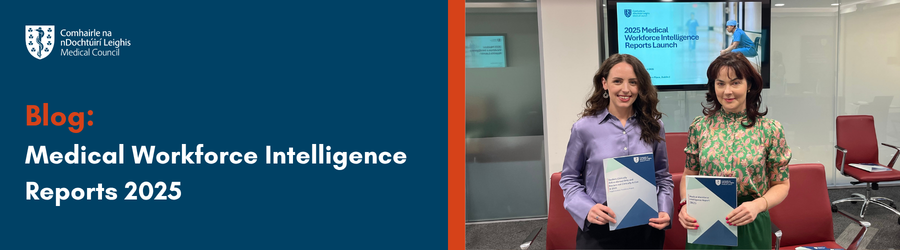
The Medical Council recently published its Medical Workforce Intelligence Report for 2025, along with a supplementary report.
The report provides quantitative analysis of demographics and divisional status, and details on employment, practice, medical disciplines and specialities. Doctors were also asked about hours spent in direct patient care, barriers to patient safety, and future career plans.
Minister for Health, Jennifer Carroll MacNeill T.D., launching the report, said, “The Medical Council’s Medical Workforce Intelligence Report provides valuable insight into Ireland’s medical workforce. High-quality workforce intelligence is essential if we are to plan effectively for the future health needs of our population and ensure patients continue to receive timely and high-quality care."
.png "Minister-for-Health-Quote-(1)")
The reports are outlined below, along with links to the full digital version for view and download.
Key Findings of the Medical Workforce Intelligence Report 2025
We have broken down the key highlights and trends found in the 2025 Report. The research reveals:
A growing and diversifying workforce
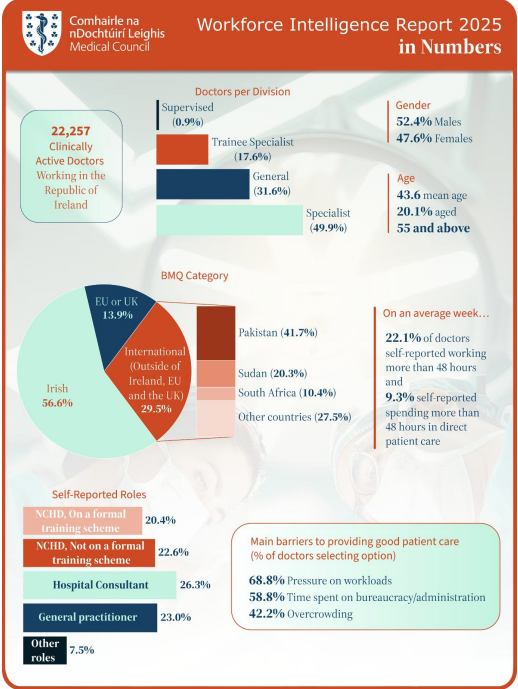
- In 2025, there were 22,257 clinically active doctors practising medicine in Ireland, representing 75.6% of doctors who retained their place on the Medical Council Register, showing that the overall size of the Register does not directly reflect the number of doctors working on the ground.
- The proportion of clinically active female doctors rose to 47.6%, representing a slight but steady increase in recent years (47.2% in 2024, 47.0% in 2023).
- The mean age of doctors was 43.6 years, with approximately one in five (20.1%) aged 55 or older and approaching typical retirement age. The gender split was almost even across all age groups except the 55 or older cohort, where 66.0% were male.
-
49.9% of clinically active doctors were registered on the Specialist Division, and 31.6% on the General Division.
- There were 5,017 doctors self-reporting as General Practitioners, with GP numbers up 5.3% on the previous year.
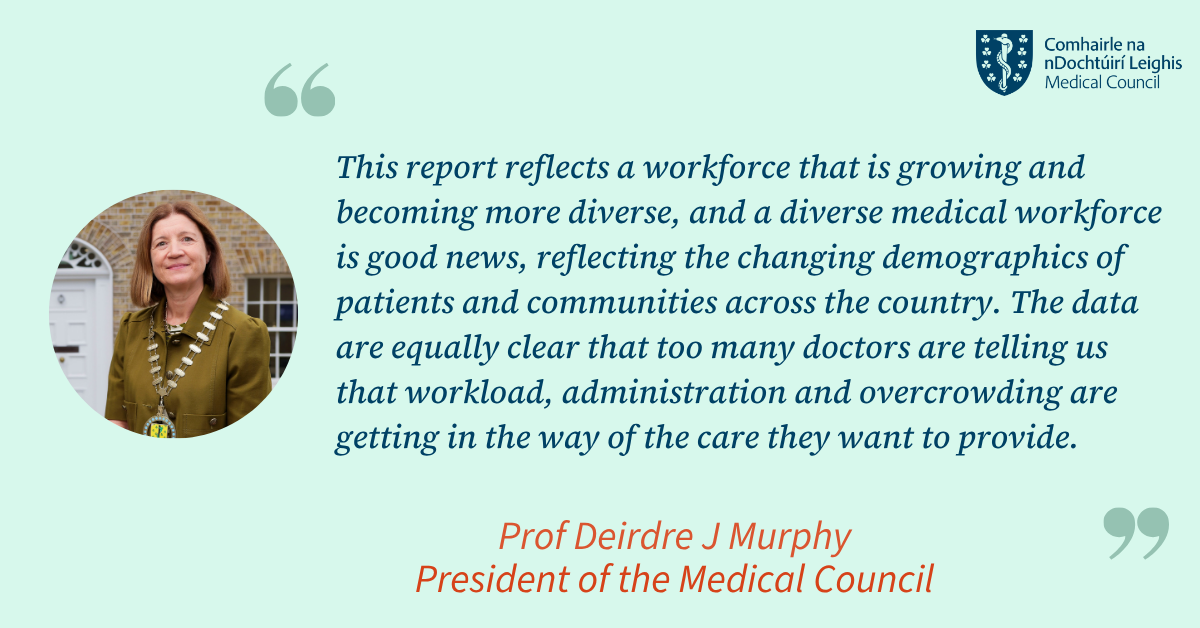
Welcoming the research today, Prof Deirdre Murphy, President of the Medical Council, said:
Persistent barriers to safe patient care
- Almost one-third of doctors (30.7%) reported never experiencing difficulties providing patients with sufficient levels of care. However, more than one-quarter (27.6%) experienced such difficulties at least once a week or more often.
- The most commonly reported barriers identified by doctors were pressure on workloads, time spent on administration and bureaucracy, and overcrowding.
-
22.1% of doctors self-reported working more than 48 hours a week on average, a slight improvement on 2024 (23.1%). 9.3% reported spending more than 48 hours in direct patient care, down from 10.7% in 2024.
GPs report the greatest strain of any group
- GPs reported the highest rate of difficulty providing safe patient care of any group of doctors, with 34.7% experiencing barriers at least weekly. The leading barriers were bureaucracy and administration, workload, and difficulty accessing specialist opinion. 10.2% of GPs worked more than 48 hours a week.
- GPs aged 34 and under were more likely to report barriers than any other age group. A fifth of the GP workforce is approaching typical retirement age.
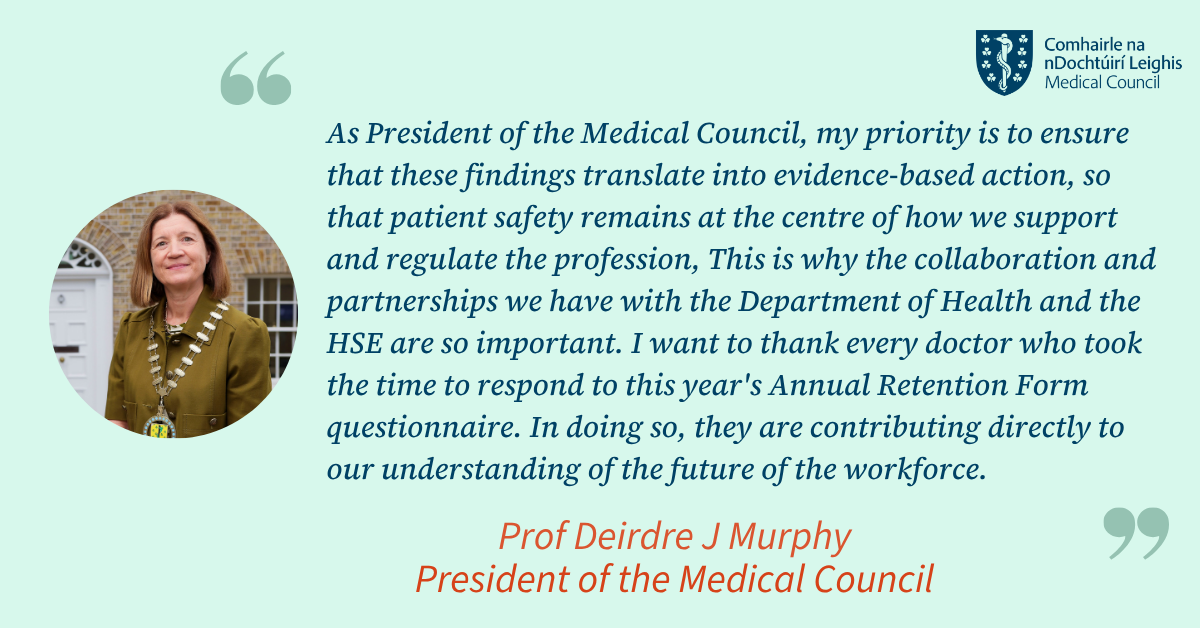
Dr Bernadette Rock, Head of Research and Regulatory Data Insights with the Medical Council, added:
.png "Dr-Bernadette-Rock-Quote-(1)")
Ireland's growing reliance on internationally trained doctors
-
56.6% of doctors obtained their basic medical qualification in Ireland, 13.9% in the EU or UK, and 29.5% outside Ireland, the EU or the UK, continuing a year-on-year rise (27.8% in 2024, 25.7% in 2023)
- The most common country of qualification for international graduates was Pakistan with 41.7% of the international graduate cohort. This was followed by Sudan with 20.3% of the international graduate cohort.
Doctors in training carrying a disproportionate burden
- Doctors on the Trainee Specialist Division were the group most likely (35.3%), to work more than 48 hours a week and the group most likely to report multiple barriers to safe care. Nearly half of those reporting 11 or more barriers were aged 34 and under.
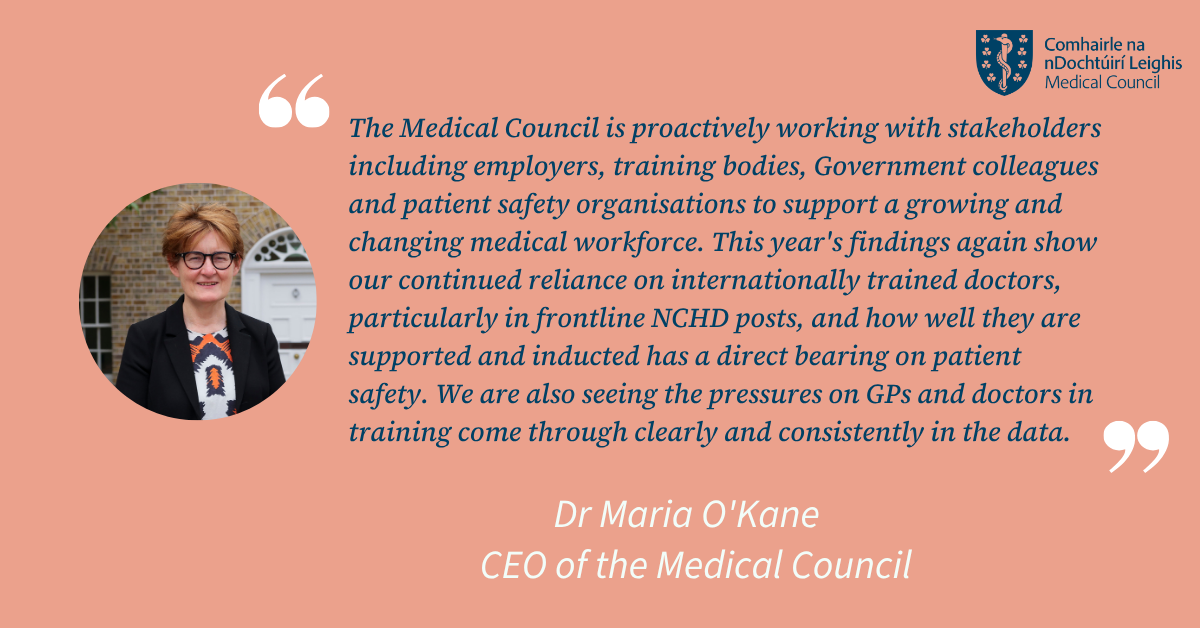
Dr Maria O'Kane, CEO of the Medical Council, added:
Supplementary report: doctors not practising in Ireland
-
1,712 doctors retained their registration but reported not practising medicine anywhere, in Ireland or abroad (5.8% of those retaining).
-
5,459 of doctors were clinically active abroad only, equating to 18.6% of those retaining their place on the Register, up from 15.6% in 2024.
.png "Dr-Bernadette-Rock-Quote-(2)")
Where can I read the full 2025 reports?
*Definitions of terms:
- Clinically Active in Ireland: All doctors who retain their place on the Register are asked if they are currently practising medicine. If a doctor selects ‘yes’ to this question they are defined as being clinically active. All doctors reporting to be clinically active, are asked where they are practising medicine. If they reported practising in the Republic of Ireland only, or both within and outside the Republic of Ireland they are defined as being clinically active in Ireland.