Blog: The Eight Domains of Good Professional Practice
-(6).png "Blog-banners-new-brand-(900-×-250-px)-(6)")
Patient safety and quality of patient care should be at the core of the health service delivery that a doctor provides. A doctor needs to be accountable to their professional body, to the organisation in which they work, to the Medical Council and to their patients, thereby ensuring the patients whom they serve receive the best possible care.
The Eight Domains of Good Professional Practice are provided for in the Rules for the Maintenance of Professional Competence made by the Medical Council on 18th of January 2011 under Section 11 of the Medical Practitioners Act 2007.
Below we’ve provided an overview of each of the eight domains and what they cover.
The Eight Domains of Good Professional Practice
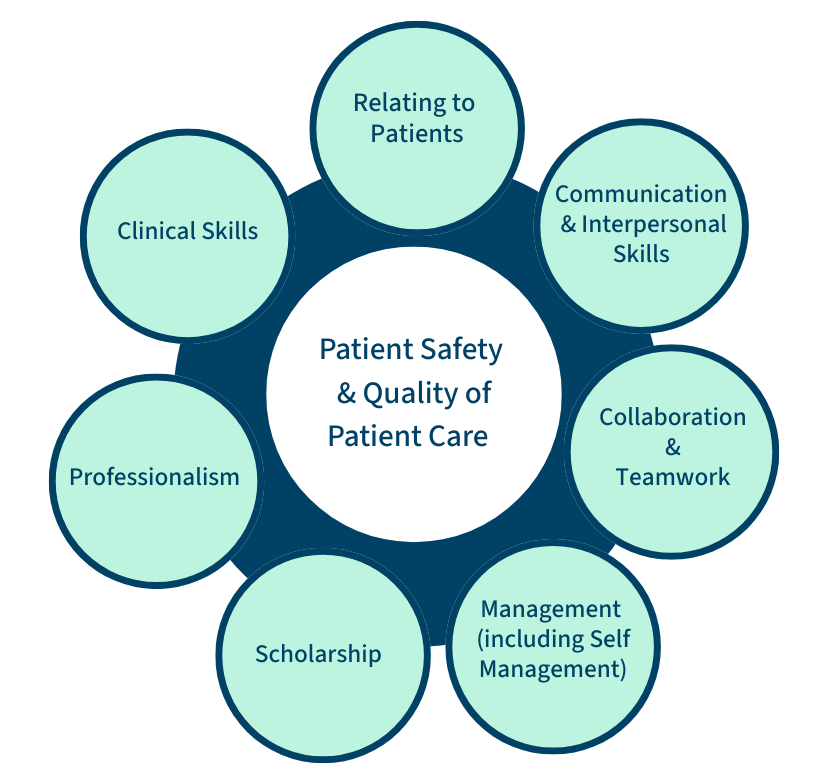

Patient Safety and Quality of Patient Care
Patient safety and quality of patient care should be at the core of the health service delivery that a doctor provides. A doctor needs to be accountable to their professional body, to the organisation in which they work, to the Medical Council and to their patients, thereby ensuring the patients whom they serve receive the best possible care.

Relating to Patients
Good medical practice is based on a relationship of trust between doctors and society and involves a partnership between patient and doctor that is based on mutual respect, confidentiality, honesty, responsibility and accountability.

Communication and Interpersonal Skills
Medical practitioners must demonstrate effective interpersonal communication skills. This enables the exchange of information, and allows for effective collaboration with patients, their families and also with clinical and non-clinical colleagues and the broader public.

Collaboration and Teamwork
Medical practitioners must co-operate with colleagues and work effectively with healthcare professionals from other disciplines and teams. He/she should ensure that there are clear lines of communication and systems of accountability in place among team members to protect patients.

Management (including Self Management)
A medical practitioner must understand how working in the health care system, delivering patient care and how other professional and personal activities affect other healthcare professionals, the healthcare system and wider society as a whole.

Scholarship
Medical practitioners must systematically acquire, understand and demonstrate the substantial body of knowledge that is at the forefront of the field of learning in their specialty, as part of a continuum of lifelong learning. They must also search for the best information and evidence to guide their professional practice.

Professionalism
Medical practitioners must demonstrate a commitment to fulfilling professional responsibilities by adhering to the standards specified in the Medical Council’s “Guide to Professional Conduct and Ethics for Registered Medical Practitioners”.

Clinical Skills
The maintenance of professional competence in the clinical skills domain is clearly specialty-specific and standards should be set by the relevant Postgraduate Training Body according to international benchmarks.