Blog: Top Tips for Doctor Wellbeing
-Copy-1.png "Blog-banners-(900-×-250-px)-Copy-1")
The Medical Council wishes to acknowledge the demanding and varied role of doctors and provide them with a simple guide which supports good nutrition, regular exercise and their mental health. All three components in equal measure will ensure doctors are at their best when treating patients. Our Doctor Wellbeing Guide provides helpful advice and tips to doctors on how to maintain best personal wellbeing.
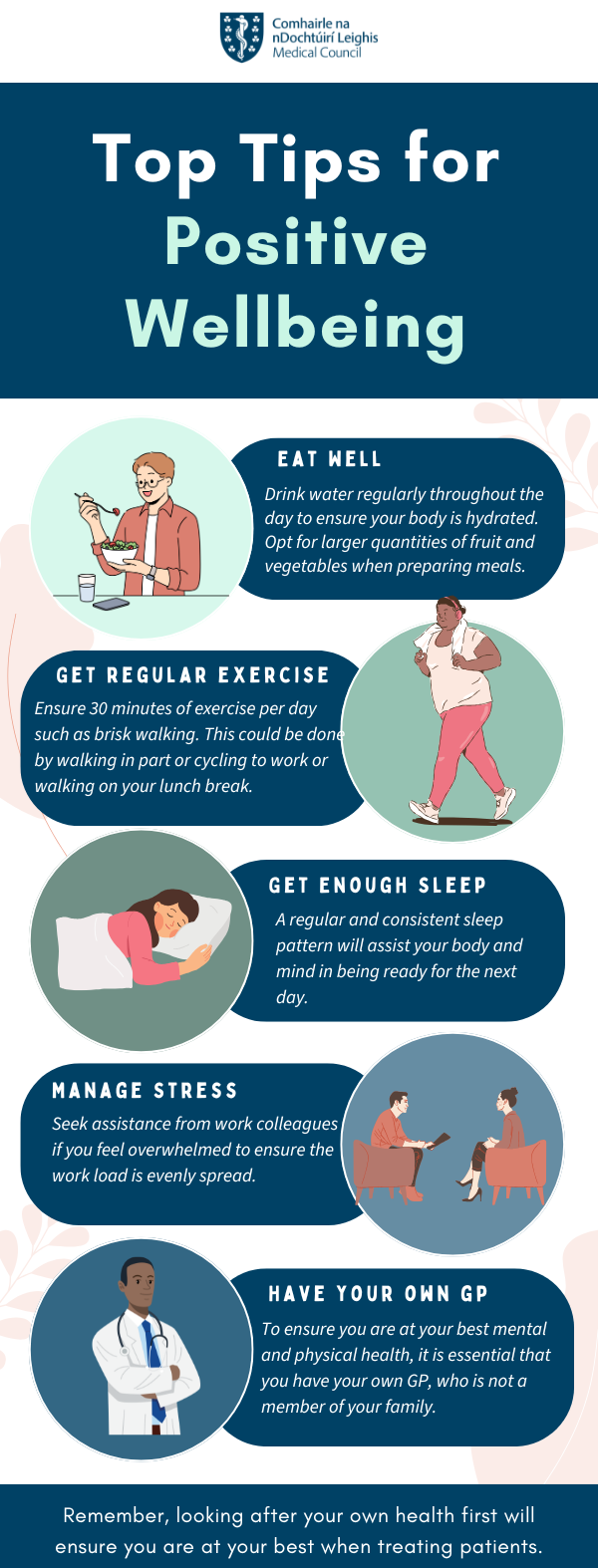
Top Tips for Positive Wellbeing
1. Eat well
Good nutrition has a positive effect on a person's physical and mental wellbeing. A diet rich in fruit, vegetables, wholegrains, seeds and unsaturated fats can help protect your mental health. Some helpful tips for doctors on maintaining a well balanced diet can be found below:
- While working, develop a regular eating pattern and avoid snacking in place of regular meals.
- Drink water regularly throughout the day to ensure your body is adequately hydrated.
- Opt for larger quantities of fruit and vegetables when preparing meals.
- Don’t skip meals or breaks or opt for fast food on the go during busy working days.
Doctors can find more information on 'Eating healthily to improve mental health' on the HSE's website.
2. Mental Health
Doctors continue to work in stressful situations and unprecedented circumstances, including at the frontline of the COVID-19 pandemic and more recently, travelling to areas of conflict to treat patients worldwide. Some helpful tips for doctors on how to exercise best personal welbeing can be found below:
- Do take regular work breaks throughout the day where possible. A full lunch break and organised short breaks throughout the day will leave you in a stronger position when meeting patients’ needs.
- Do seek assistance from work colleagues if you feel overwhelmed to ensure the work load is evenly spread.
- A regular and consistent sleep pattern will assist your body and mind in being ready for the next day.
- Seek professional help for mental health issues such as anxiety or depression.
Mental Health Ireland provides a suite of high-quality, evidence-based booklets, videos, resources, webinars, and podcasts on mental health topics available on their website.
3. Regular Exercise
Looking after your mental and physical health first will ensure you are at your best when treating patients. Tips on how to introduce exercise into your daily routine can be found below:
- Ensure 30 minutes of exercise per day such as brisk walking. This could be done by walking in part or cycling to work or walking on your lunch break.
- Practise simple exercises in the morning before work to help feel energised and fresh.
- Use fitness apps on your smartphone to record and set daily targets for walking or steps.
- Simple measures like taking the stairs instead of the lift can really boost your activity level as well as offering a means of getting a quick break away from others if you feel overwhelmed.
- Ensure walking occurs throughout the day in your workplace or on your break.
- If you usually jog or walk daily during normal circumstances it is especially important to continue to do so during stressful periods to maintain good mental health.
The HSE offers advice to people of all ages on how physical activity is linked to positive mental health and wellbeing.
4. Importance of having your own GP
- To ensure you are at your best mental and physical health, it is essential that you have your own GP, who is not a member of your family.
- As stated in the Guide to Professional Conduct & Ethics 8th edition, you should never self-prescribe medication or treat for yourself.
- You should never prescribe medication or treat friends or families unless in an emergency.
- Your employer or the Irish College of General Practitioners website can assist you in finding a local GP.
The Doctor Wellbeing Guide also provides information on what to do if you have concerns about the wellbeing of another doctor, the Medical Council's Health Committee, Doctor's obligations and wellbeing supports for doctors.
Additional Helpful Resources