Blog: Preparing for your Medical Appointment
-(4).png "Blog-banners-new-brand-(900-×-250-px)-(4)")
Ahead of an appointment with a doctor or healthcare professional, it can be helpful for patients to take some time to prepare so that they get the best out of their appointment. We’ve included some useful tips below that might be worth considering when preparing for a healthcare appointment;
Patient preparation tips
1. Write down questions in advance to ensure everything is covered
It can often be hard to remember all the questions you want to ask during a healthcare appointment. That's why it's worth considering taking the time in advance to sit down and prepare all of your questions. You can then bring them with you to your appointment and share them with your doctor or healthcare professional and explain that you need them to answer those questions during your appointment, ensuring you have a positive experience and leave your appointment with all the information you need. We've included some sample questions below that can help you get started in your preparation (Source HSE).
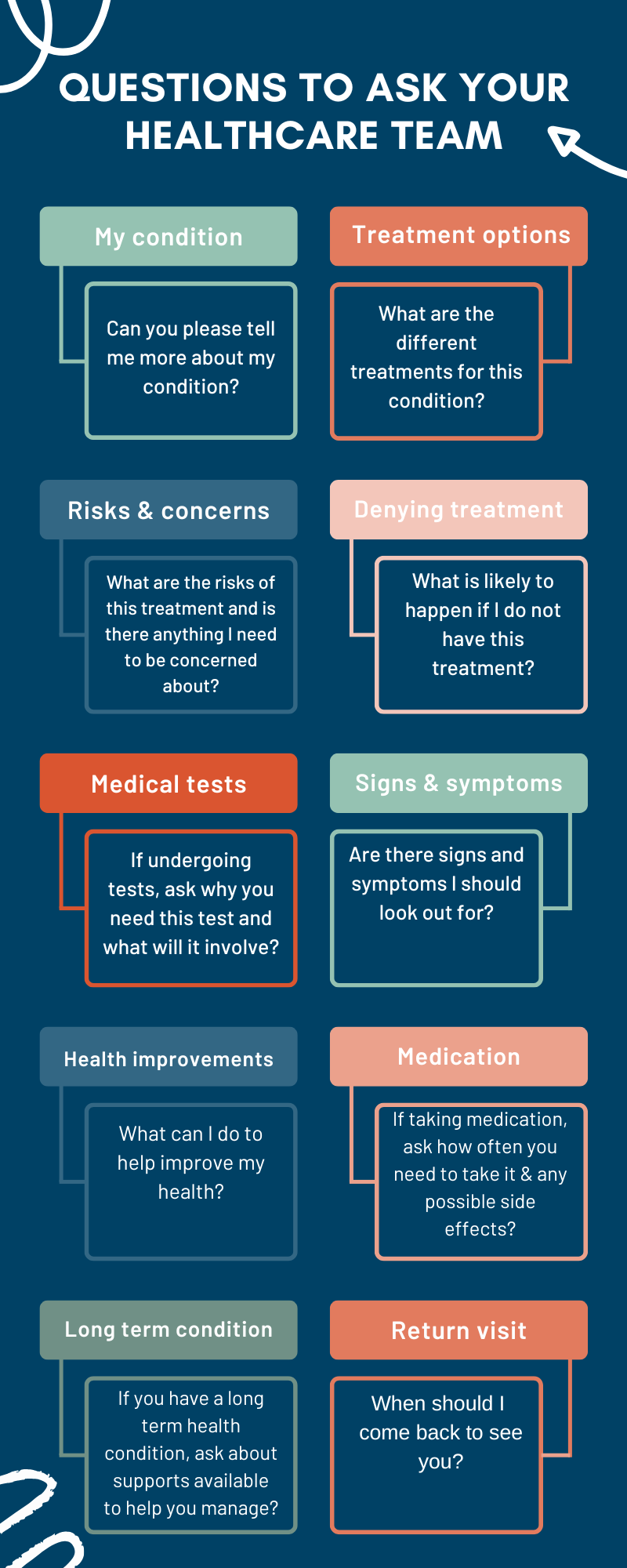
2. Tell doctors about any previous treatments or surgeries, any allergies and any current medication being taken
In order for a doctor to treat you, they need to be fully informed of all of your previous treatments or surgeries so that they have a full picture of your health and can take this into consideration. This also includes any allergies that you may have and any medications that you are currently taking. Again, it can often be hard to remember all of this information on the spot, so it might be worth taking the time before your appointment to write down all of your previous treatments, surgeries, allergies or current medication, to be sure that you don't forget anything.
3. Learn about conditions and treatments by asking healthcare providers
Your doctor or healthcare provider is your best source of information about conditions and treatments so be sure to ask them to explain any conditions you may have or treatments you need during your medical appointment. Researching on the internet can often be overwhelming so make sure you choose reputable sources. Consider writing down any questions you have about your condition in advance. When it comes to treatment options, you can ask your healthcare provider a range of questions to get more information about all of the different treatment options available, how they can help you, any risks involved and what is likely to happen if you don't have the treatment.
4. Take notes during the consultation and review them afterwards
There is often a lot of information passed on during a healthcare appointment so it can be helpful to take notes to make sure that you don't forget anything. Some patients find it really helpful to review the notes afterwards so that they can remind themselves of what their healthcare professional advised or prescribed.
5. Bring a family member or friend so they can help ask questions
Sometimes a medical appointment can seem daunting, so it can help to bring a family member of friend if you feel you need extra support. Speak to them in advance of any questions or concerns that you may have about the appointment so that they can be prepared and help you on the day. They can help you ask any questions you have or take some notes to share with you afterwards.
6. Inform doctors of any health conditions that run in the family.
It's important to give your doctor all the information they require so that they have a full picture of your health and are better placed to treat you. This includes informing them of any health conditions that may run in your family, even if you think they are not relevant.
7. If tests are being carried out, be sure to follow up with the doctor and ask for the results.
If you are having tests and don't receive the results in the timeframe stated by your doctor or healthcare professional, don't assume that no news is good news. It's important to follow up with your healthcare provider and ask for the results or an update on when you might expect them.
8. If having surgery, clarify any questions you have with the doctor in advance
If you're having surgery, you want to be fully prepared and informed in advance. Prepare any questions you might have and bring them along to your initial appointments so that you have all your answers in advance. Ask the doctor to clearly explain the surgery or procedure so that you are aware of what will happen and can prepare yourself.