Blog: Working in Partnership - Doctors and Patients
-(7).png "Blog-banners-new-brand-(900-×-250-px)-(7)")
When patients take an active role in their own care and decisions about their treatment, they can improve their healthcare experience. Doctors and healthcare workers have a responsibility to make healthcare as safe as possible, but patients also play an important role. Everyone needs to talk and listen to each other to make our healthcare as safe as possible.
We’ve created some useful content to help improve patient healthcare by encouraging a partnership between doctors and patients.
What is a good partnership?
Partnerships are based on good communication, trust and mutual respect. Good communication is important for doctors to diagnose and treat patients effectively. Doctors need to understand a patient’s:
.png "Working in Partnership - patients")
To help doctors to do this, patients need to answer their questions fully and honestly. This includes being as clear as possible when giving information about health, concerns or worries, and expectations.
Trust and mutual respect are important in any partnership. Doctors should provide patients with good care and treatment. They should respect a patient’s dignity, privacy and choices. In return, patients should keep appointments or tell their doctor if they cannot attend.
Patients should agree a treatment plan with their doctor. It is important for their health and to protect others around them that they take medication as instructed and complete their treatment, even if symptoms have disappeared.
.png "Working in partnership - good partnership")
What doctors need to know
Patient’s medical history
Doctors will usually want to know a patient’s medical history. This includes:
- previous illnesses and conditions; and
- knowing if you’ve been in hospital before and why.
It also includes information about parents and family members, particularly if any conditions or illnesses are common in the family;
-
Patient’s health, symptoms, and any medication being taken - Medication includes over-the-counter and herbal remedies. Patient’s should describe their symptoms and any concerns they have about their health to their doctor.
-
Other information about the patient - If a doctor knows a patient’s social circumstances and lifestyle, it can help them understand the patient’s overall health better. Patients need to answer questions honestly, telling their doctor anything that is important and that might affect decisions about their treatment.
Doctors giving patients information
Doctors will also give patients information. They should explain clearly the diagnosis and treatment options, and advise patients on how to take any medications they have been prescribed. Patients should listen carefully and ask for extra information they need about their:
-Copy.png "Working in Partnerhip - questions")
By working in partnership with their doctor and taking an active role in their care, listening and asking questions, patients can improve their healthcare experience.
What patients say
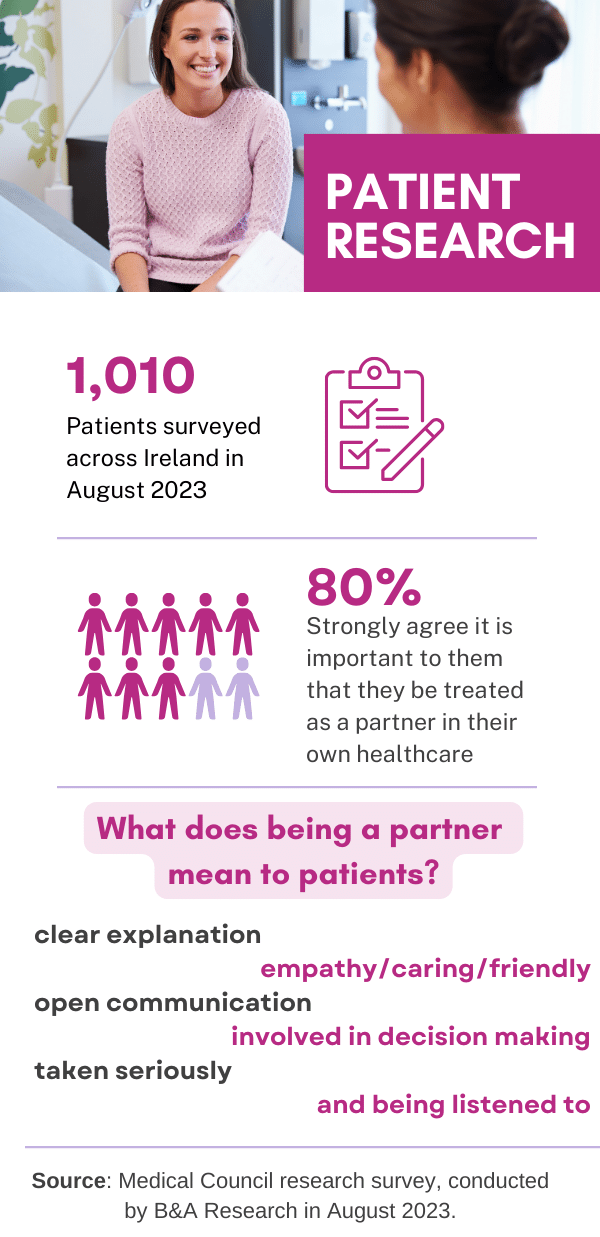
We reached out to over 1,000 patients to find out if working in partnership with their doctor was important to them in terms of their own healthcare experience. You can see an overview of the research findings below;