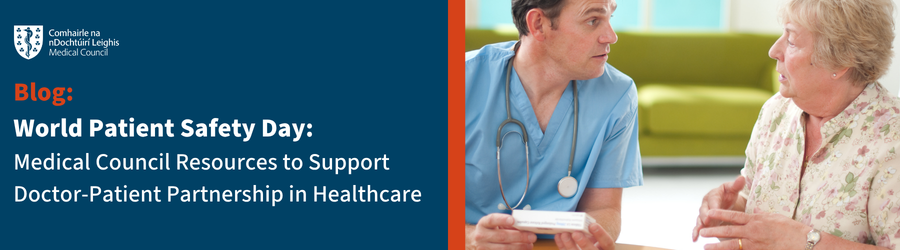
World Patient Safety Day: Medical Council Resources to Support Doctor-Patient Partnership in Healthcare
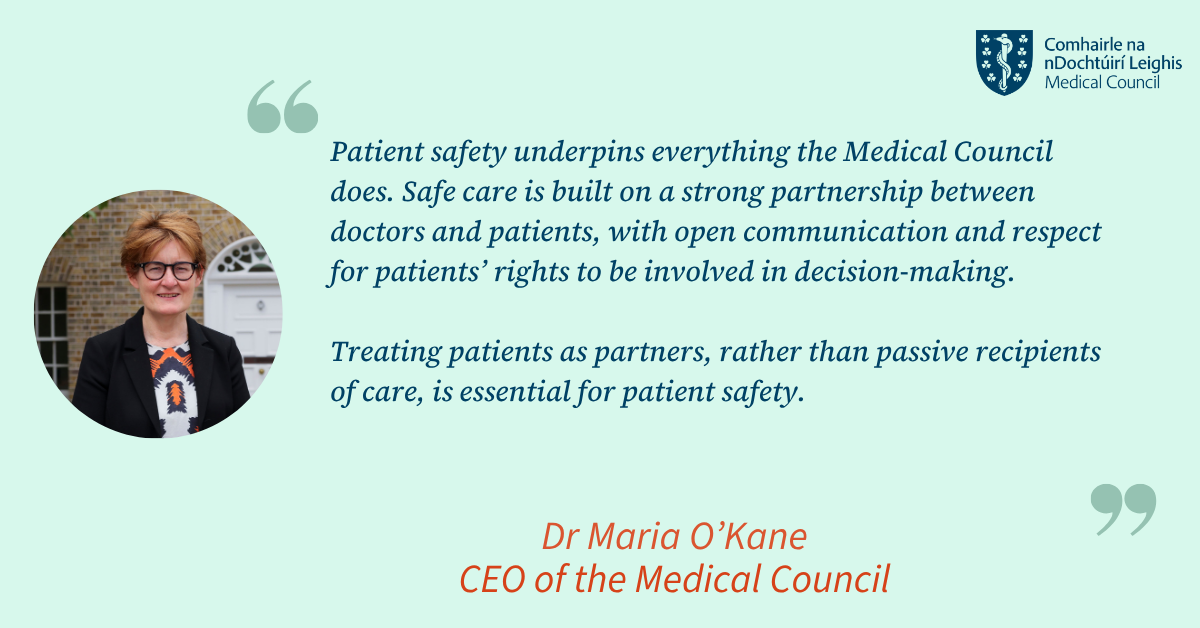
Patient safety is at the heart of the Medical Council's work. We protect the public by promoting and helping to ensure high standards of professional conduct and medical education, training and competence among doctors.
The Medical Council believes that it is important for patients and doctors to work in partnership to make healthcare as safe as possible. This is particularly important for people living with long-term conditions who may have many interactions with health services throughout their lives.

World Patient Safety Day 2026
The theme of World Patient Safety Day 2026, established by the World Health Organisation (WHO), is “Safe care for life!” and focuses on the safety of people living with noncommunicable diseases (NCDs), including heart disease, cancer, diabetes and chronic respiratory illness.
People living with NCDs can be at greater risk of harm because of the long-term and complex nature of their care, including the need for ongoing treatment and frequent interactions with doctors and health services. The WHO highlights the importance of addressing safety risks across the continuum of healthcare, from prevention, early
detection
and diagnosis through to treatment and long-term management.
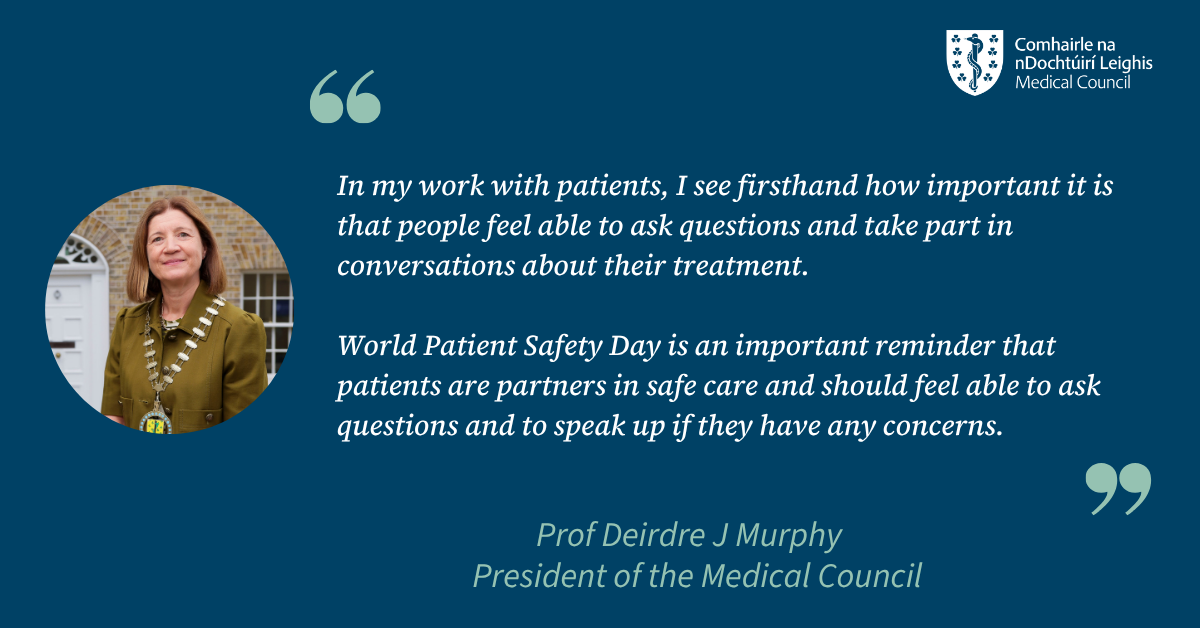
The following blog provides guidance for patients on how to check the register, make a complaint and prepare for medical appointments, along with valuable information on how to work in partnership with your doctor and the Patient Advocacy Services available to support patients.
Medical Council Resources
By law all doctors must register with the Medical Council in order to practise medicine in Ireland. Patients can check our website to verify that a doctor is registered to practise medicine in Ireland, and can also check a doctor's qualifications through this facility: Check the Register.
As the regulator of doctors, the Medical Council’s primary focus is to protect the public by promoting the highest professional standards among doctors.
By maintaining this focus, we uphold our commitment to fostering a healthcare environment that prioritises patient safety and trust in doctors. If you have an issue or concern about your doctor, the Medical Council has a dedicated resource section on our website explaining what you can do as a patient. Please visit our webpage for more information: Information on Complaints.
The Medical Council also provides a Glossary of Terms that are frequently used at Fitness to Practise Inquiries which patients may find helpful.
Independent Patient Advocacy Services
A Patient Advocate is somebody who can act on the patient's or the patient's family's behalf when dealing with the hospital or healthcare service. A patient advocate can represent the views of those seeking information or making complaints when required. For more information on the list of Patient Support Groups and Services, please visit our webpage: Patient Advocacy Services.
-
European Patient Forum initiative on Patient Empowerment
The European Patient Forum (EPF) defines patient empowerment as a "process that helps people gain control over their own lives and increases their capacity to act on issues that they themselves define as important”. For more information on patient empowerment, visit EPF's website: What is patient empowerment?
-
Patients for Patient Safety Ireland
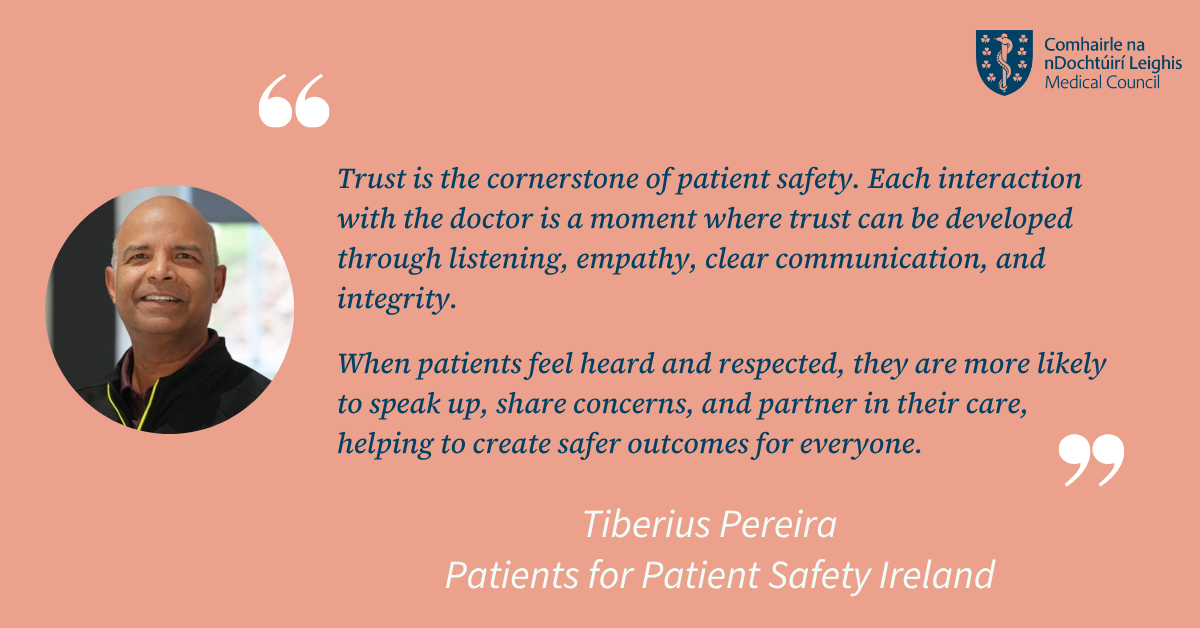
Patients for Patient Safety (PFPS) is a WHO initiative aimed at improving patient safety in healthcare. Their objective is to encourage healthcare providers to acknowledge patients and their families as an untapped resource for information and recognise the patient experience as a learning tool. Learn more on their website: Patients for Patient Safety Ireland.
-
HSE Chronic Disease Management Prevention Programme
The HSE Chronic Disease Management Prevention Programme aims to enable General Practitioners to identify, engage, and manage patients at high risk of cardiovascular disease or diabetes, and to improve their risk profile. In the first two years of operation, over 155,000 high-risk patients have been enrolled. Encouraging reductions in risk factors are being achieved for patients as the programme progresses. Additionally, patients with previously undiagnosed chronic disease have been identified and appropriately managed in the Chronic Disease Management Programme. Read more about the programme on the HSE's website: The First Report of the Chronic Disease Management Prevention Programme in General Practice.
-
Making Every Contact Count
Making Every Contact Count (MECC) is a HSE programme aimed at preventing and managing chronic disease. MECC training teaches you skills that help you use everyday interactions to support people’s health and wellbeing. For more information on the MECC programme, visit the HSE's website: Making Every Contact Count training programme.
Medical Council Publications and Support
-
Telemedicine: A Guide for the Public
Telemedicine involves accessing a doctor remotely, through a phone or laptop for example, without attending the doctor in-person. The Medical Council has prepared some guidance explaining what you can expect when accessing a doctor through telemedicine. Find out more over in the Telemedicine: A Guide for the Public section.
-
Guide to Professional Conduct and Ethics
The Medical Council protects the public by promoting and ensuring high standards of education, training, conduct and competence among doctors who are registered with the Medical Council. As part of its role, and to support doctors to meet these high standards, the Medical Council produces guidance on matters related to professional conduct, ethics and aspects of practice. The Guide is also useful for patients as it clarifies the standards of care they should expect from their doctor. Read more in our Guide to Professional Conduct and Ethics (9th Edition) 2024.
-
Working in Partnership: Doctors & Patients
When patients take an active role in their own care and decisions about their treatment, they can improve their healthcare experience. Doctors and healthcare workers have a responsibility to make healthcare as safe as possible, but patients also play an important role. The Medical Council has created some useful content to help improve patient healthcare by encouraging a partnership between doctors and patients. Read more in our blog: Working in Partnership – Doctors and Patients.
-
Support for Patients preparing for a Medical Appointment
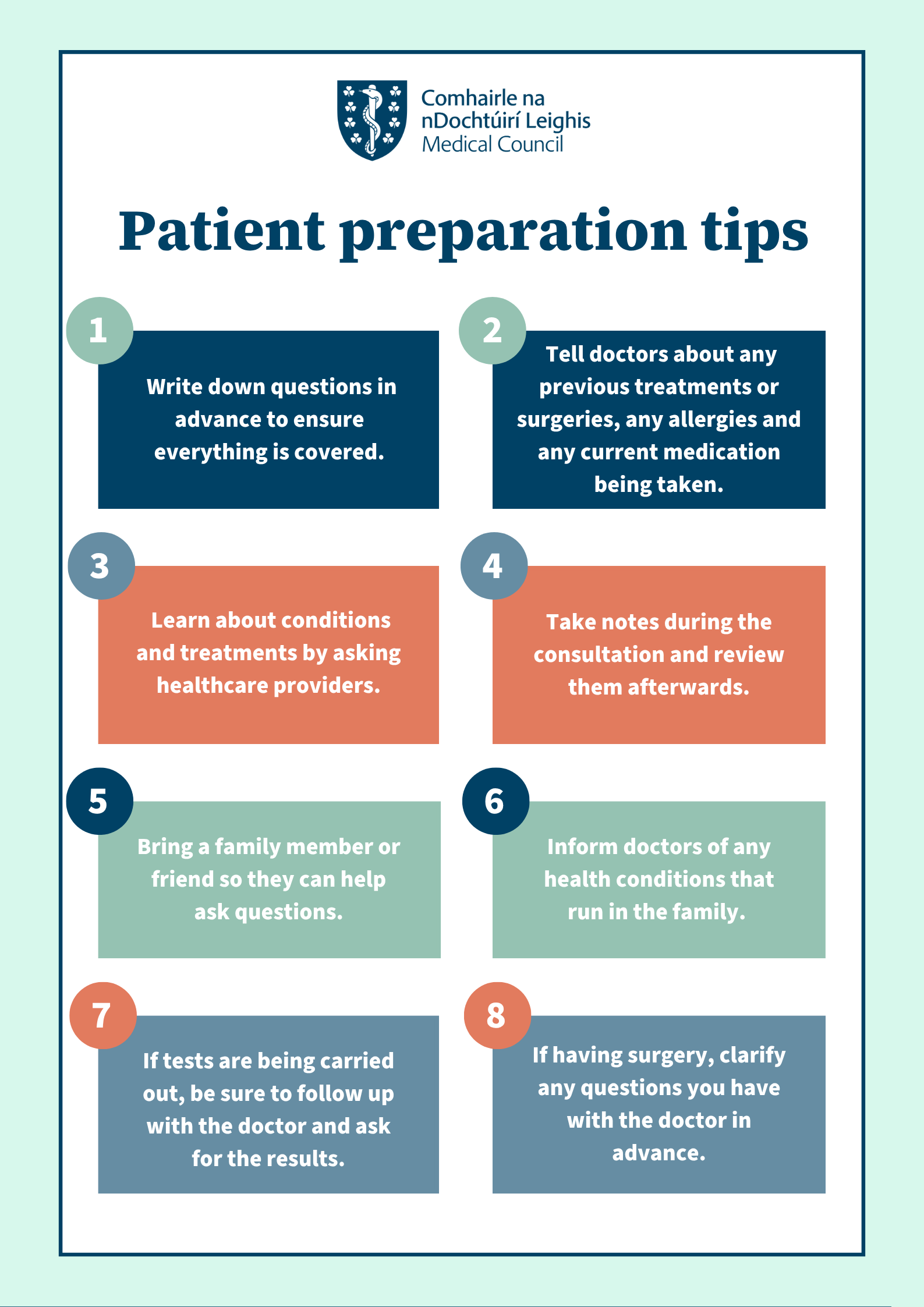
Ahead of an appointment with a doctor or healthcare professional, it can be helpful for patients to take some time to prepare so that they get the best out of their appointment. We’ve included some useful tips below that might be worth considering when preparing for a healthcare appointment. You can also find more details over in our blog Preparing for your Medical Appointment.