How does the Medical Council protect patients?

Patient safety is at the heart of everything the Medical Council does. As Ireland's regulator of medical doctors, our purpose is to protect the public by promoting and helping to ensure high standards of professional conduct, education, training and competence among doctors.
From regulating the doctors who can practise medicine in Ireland, to overseeing medical education and training and handling concerns about doctors, our work helps build trust in healthcare and supports safe, high-quality patient care across Ireland.
Here's how we protect patients through our regulatory processes and activities.

1. Ensuring Only Qualified Doctors Can Practise
One of the most important ways we protect patients is by maintaining the Medical Council Register, a public register of doctors who are authorised to practise medicine in Ireland.
Every doctor practising in Ireland must be registered with the Medical Council. Before a doctor can be registered, their qualifications, education and training are verified to ensure they meet the standards required to provide safe patient care.
This means patients can have confidence that their doctor has met the necessary requirements to practise medicine safely and professionally.
In 2025, 22,257 doctors were clinically active and working in the Republic of Ireland, providing care to patients nationwide.
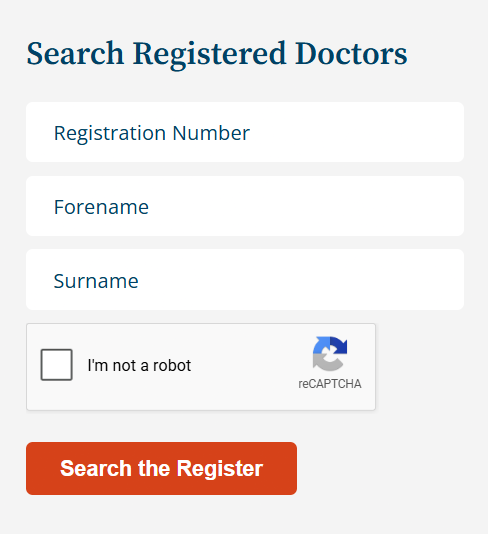
Patients can check our website to verify that a doctor is registered to practise medicine in Ireland and can also check a doctor's qualifications through this facility: Check the Register.
Learn how you can search for a registered doctor on our website.


2. Promoting good medical practice and standards
Patients are entitled to expect high standards of care from their doctors. The Medical Council promotes and supports good medical practice through professional guidance and ethical standards that help doctors make safe, patient centred decisions throughout their careers.
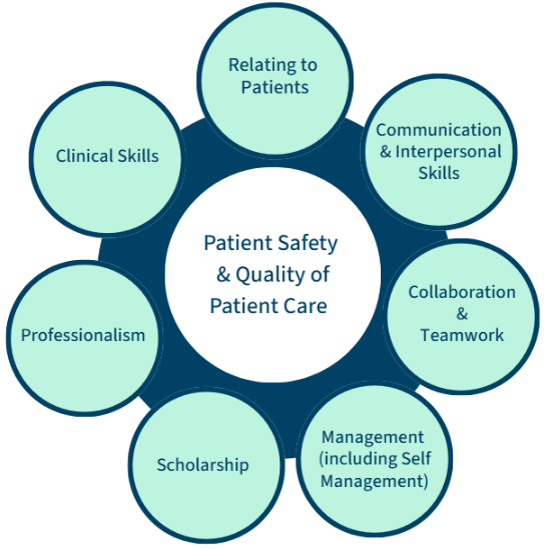
Our Guide to Professional Conduct and Ethics (9th Edition) 2024 outlines the values and principles that underpin professionalism and good medical practice in the interests of patients and the broader population. It provides guidance to doctors on delivering care that is respectful, ethical and focused on patient safety. The guidance reflects the Medical Council's Eight Domains of Good Professional Practice, a framework that describes the competencies required of doctors throughout their education, training and professional careers.
The Medical Council also manages
Performance Assessment
processes
maintained
and patients remain protected.

3. Supporting Lifelong Learning and Professional Competence
Medicine is constantly evolving. New treatments, technologies and research mean that doctors must continually update their knowledge and skills.
The Medical Council oversees professional competence requirements to ensure doctors engage in lifelong learning throughout their careers. Maintaining professional competence is recognised as a key patient safety measure that supports safe, high-quality care.
Through continuing professional development and ongoing learning, doctors can stay up to date with the latest advances in medicine and continue to deliver the highest standards of care to patients.
Learn more about how doctors maintain professional competence as a key patient safety measure in our blog.

4. Maintaining High Standards in Medical Education and Training
The Medical Council sets standards for medical education and training in Ireland and works with medical schools, intern networks, postgraduate training bodies and clinical training sites to ensure future doctors receive high-quality education.
A key part of this role is accrediting medical education programmes and the bodies which deliver them and inspecting clinical training sites to ensure students, interns and trainee doctors receive appropriate training and supervision.
In 2024/2025, eight medical schools and 12 programmes held full Medical Council accreditation, supporting the training of 7,471 medical students on their journey to becoming doctors.
In 2025/26 13 postgraduate training bodies and 56 active programmes of specialist training were accredited ensuring 4,498 trainees receive quality specialist training.
By ensuring education and training meet high standards, we help safeguard the future quality and safety of healthcare in Ireland.

5. Using Research to Improve Patient Safety
The Medical Council conducts research on Ireland's medical workforce, providing valuable insights that support healthcare planning and policy development. These findings help identify challenges, anticipate future workforce needs and support better patient outcomes.
Every year, the Medical Council produces a Workforce Intelligence Report which presents analysis of the clinically active medical workforce in Ireland. It analyses the data collected during the annual retention process, presenting key findings on demographics and employment practices of the clinically active medical workforce in Ireland, including divisional status, medical disciplines and specialities.
Doctors are also asked about hours spent in direct patient care, barriers to patient safety, and future career plans. The recently published Medical Workforce Intelligence Report 2025 highlights a growing and increasingly diverse medical workforce while providing important evidence to support workforce planning and patient safety initiatives. This research helps policymakers, healthcare leaders and educators make informed decisions that benefit patients and the wider healthcare system.
The reports are outlined below, along with links to the full digital version for view and download.

6. Listening to Patients and Addressing Concerns
Protecting patients also means ensuring their voices are heard.
If a member of the public has concerns about a doctor, the Medical Council provides an independent process through which complaints about doctors can be made and assessed. This important function helps maintain public confidence in the medical profession while ensuring appropriate action can be taken when necessary.
We recognise that engaging with the complaints process can be challenging. To support doctors involved in regulatory processes and members of the public with open complaints, we offer CAREhub, an independent and confidential wellbeing support service provided by Lyra Health International. The service offers a safe space to access professional emotional and wellbeing support.
Protecting Patients Everyday
From registering doctors and setting professional standards to overseeing education, promoting lifelong learning, conducting workforce research and investigating concerns, the Medical Council works every day to protect patients and the public.
Patient safety is not just one part of our work. It is the foundation of everything we do.
The Medical Council has also created some useful content for patients to help them prepare for medical appointments and improve patient safety outcomes:
For information on Patient Advocacy and a list of Patient Support Groups and Services, please visit our webpage: Patient Advocacy Services.
To learn more about the Medical Council and how we protect patients, visit www.medicalcouncil.ie.